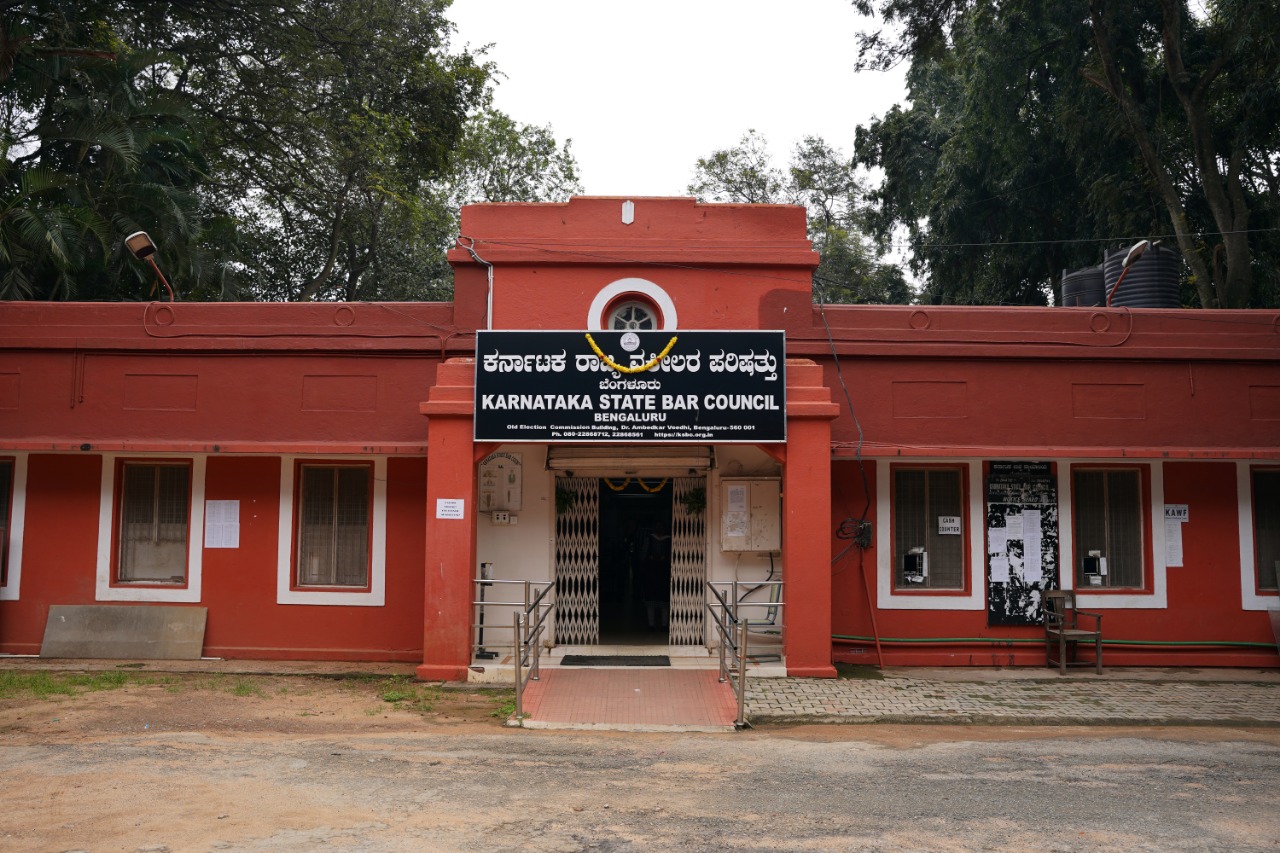
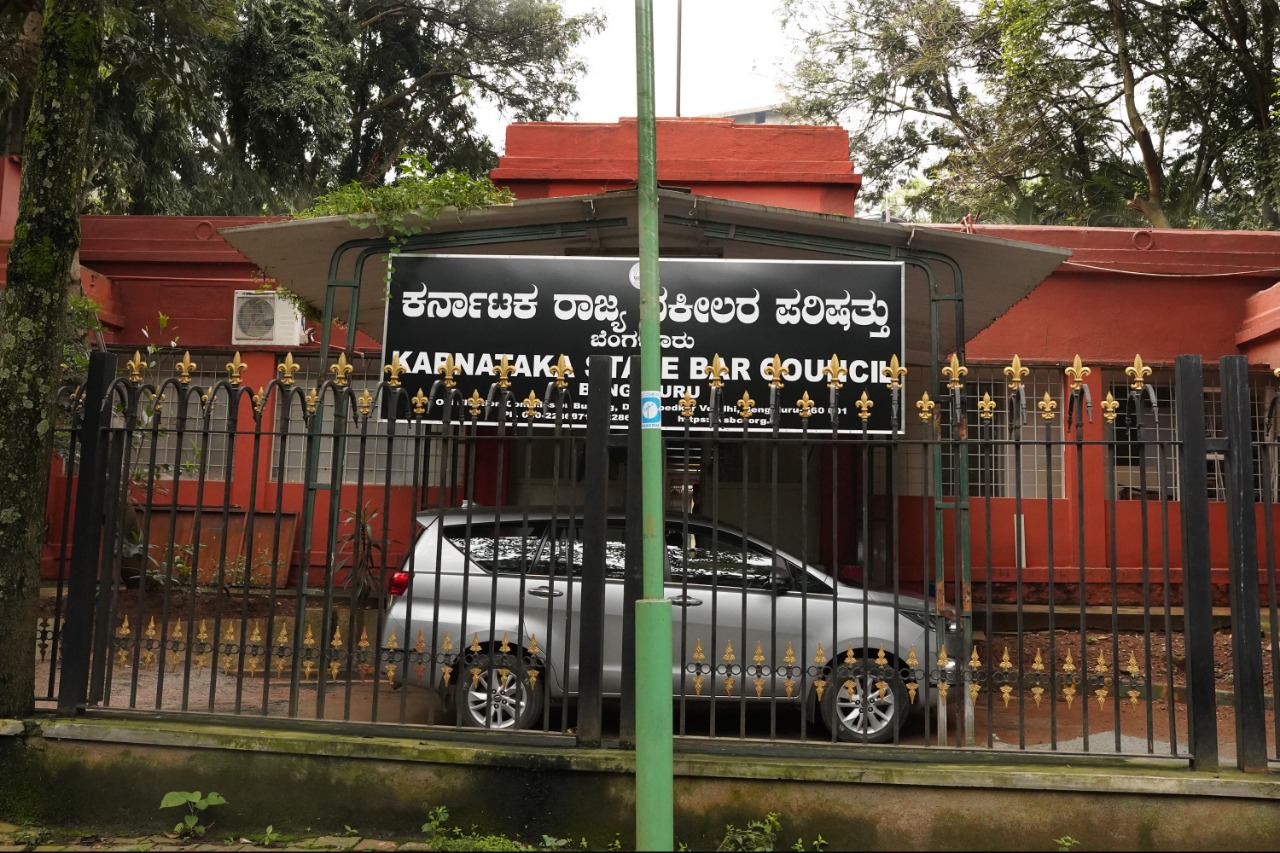
CIRUCLAR : All contestants are hereby required to cross-check the spelling of their names as per the records of the Karnataka State Bar Council (KSBC) in the format of the Ballot Paper. In case of any discrepancy, you are required to intimate the same to the office of the KSBC by way of a written letter duly signed by the contestant on or before 24-02-2026 by 2.00 p.m.
CIRCULAR : The High Powered Committee has taken a decision to constitute a Booth with minimum number of 25 voters. Hence in this regard some of the Booths with less than 25 voters are MERGED with nearby Booths
1.Single Ballot Paper for the General Election -2026.
2.Names of all the Contesting Candidates’ including the Women
Candidates in the Ballot papers will be as per alphabetic order as
per the Rolls. (Initials will be in the end)
COUNTING :
1.In case of women Candidates, the elimination of women candidates
would be, till the last FIVE women candidates.
2.If any Women Candidate secures highest Votes and is declared
elected, she will be considered as ONE among the five Women
Representatives.
3.Then only remaining FOUR Women Candidates will be considered
upto the last counting. (1 + 4 )
4.If more than FIVE Women Candidates get elected by securing highest
Votes, it would be as many as elected.
BOOTH :
1.There will be no separate Booth in the premises of Supreme Court
of India or in the premises of the High Court of Karnataka.
NOMINATION FORM
Charges for Nomination Forms For General Election - 2026: Rs. 1000/- each only cash payment
Documents to be attached to Nomination Forms:
As per Bar Council of India, declaration form shall be appended by each contesting candidate with note that:
(a) The Contestant is not convicted as on the date of filing nomination, he should be qualified candidate;
(b) The Contestant shall submit the declaration that he is qualified as per the BCI Election Rules and amended Rules;
(c) Copy of the Enrolment Certificate & Identity Card issued by the Bar Council;
(d) Any false information in the declaration, results in instant disqualified from elections.
(e) 2 Passport size Photographs (In dress code)
(f) Rs 1,25,000/- towards Election Deposit - dd drawn in favour Of Secretary, Karnataka State Bar Council
Advocates who wish to collect their original Enrolment Certificate are hereby informed to personally visit the office of the Karnataka State Bar Council with the following documents:
1. A copy of the All India Bar Examination (AIBE) result sheet.
2. Two recent passport size photographs.
3. Advocates must be dressed in formal advocate attire (dress code mandatory).
Legal Practitioners Act, 1879 came into force with effect from 1st January, 1880.
A Person who is qualified to be pleader / vakil / muktas has to appear for examination
and after obtaining the certificate he / she may apply under Sec. 7 of the Legal Practitioners
Act and Register their name in any Court or Revenue Office situated within the local limits of
the Appellate Jurisdiction of the High Court. As Per Sec. 11 of this Act, the High Court may
frame the rules declaring what shall be deemed to be the functions, powers and duties of pleaders / vakils / muktas.
Right from inception till 30th June, 2018, 92,500 number of Candidates enrolled themselves as Advocates in the Karnataka State Bar Council. One Shri. M. Narasimhaiah of Shimoga enrolled himself as an Advocate on 9.10.1914 and his date of birth is 19.12.1888 and another Shri. Subbarao of Chikkaballapur enrolled himself as an Advocate on 21.12.1914 and his date of birth is 1.12.1877.(As per the entry on the Rolls of this Bar Council).
Prior to coming into force of the Bar Council Act, 730 Members enrolled themselves as Pleaders. In the year 1926 totally 12 Members enrolled as Pleaders. Sri. Jade Krishna Rao of Davanagere is the first person to register his name in the said year During 1947, 32 Members were enrolled as advocates, Sri. H. R. Venkataramaiah of Bangalore enrolled on 2.1.1947.